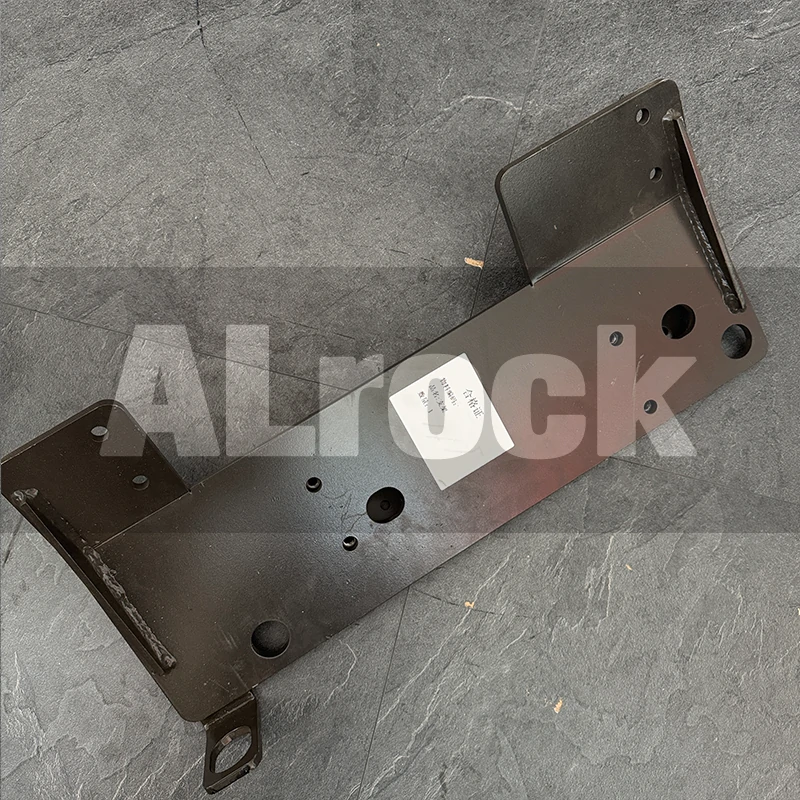
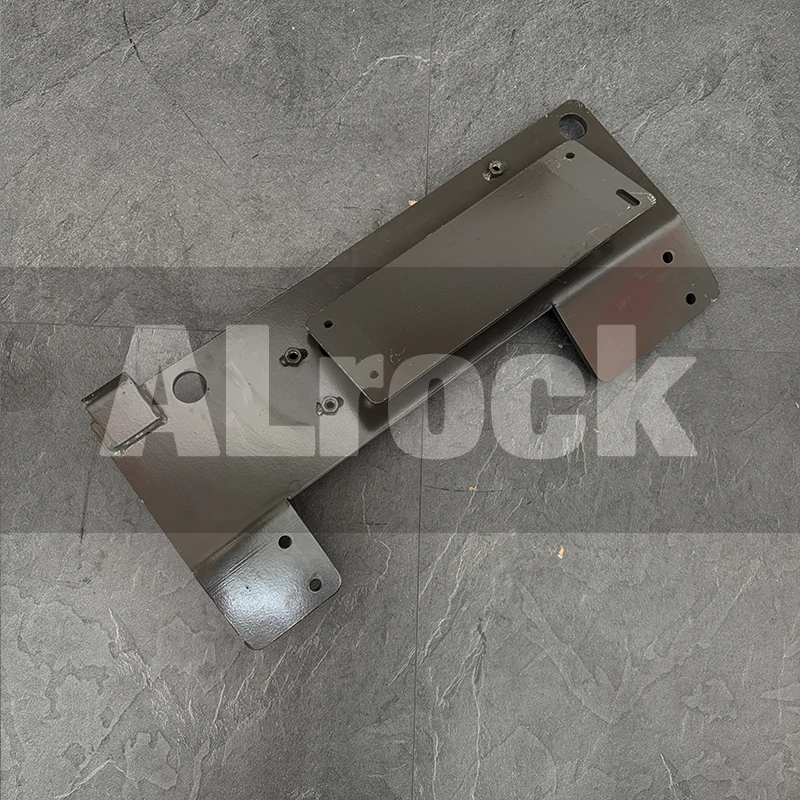
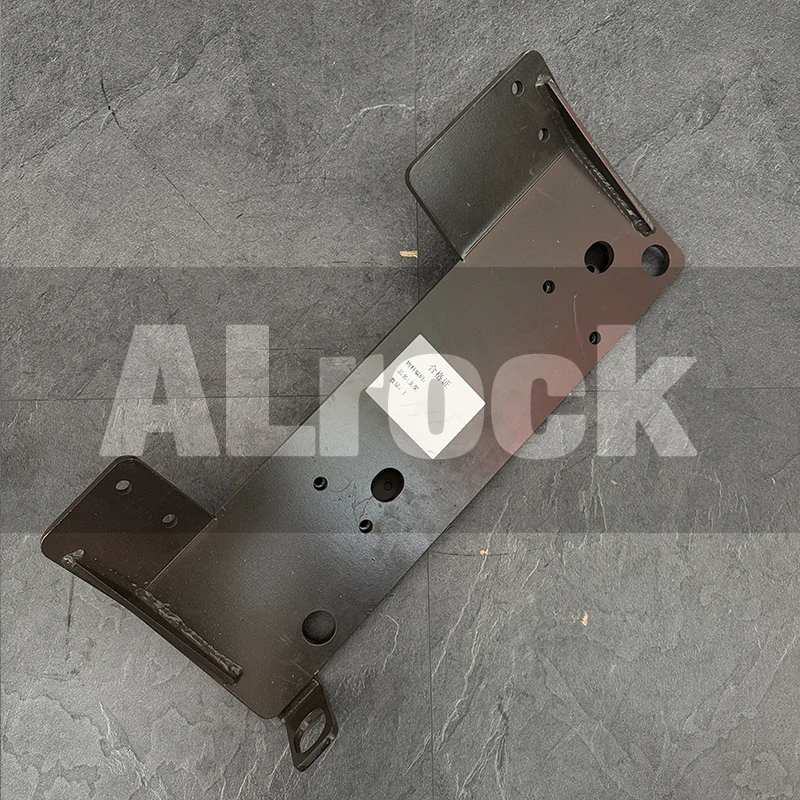
Bracket 29130030871 is a critical high-strength structural component for Hydraulic Rock Drills. It is engineered for heavy-duty mining component mounting and load-bearing support. For instance, it mounts hydraulic valve blocks in underground drill power units. Additionally, it supports motor assemblies in open-pit hard rock drill rigs.
Mining environments pose severe challenges for drill brackets. First, heavy component loads risk structural deformation and mounting failure. Second, 50G continuous vibration loosens fasteners and disrupts mounting precision. Third, mining slurry and humid air trigger corrosion and coating peeling. Fourth, weld fatigue from vibration leads to structural cracking and separation. Fifth, extreme temperature swings weaken material strength and coating adhesion.
These issues often lead to bracket malfunction. For example, a deformed bracket causes component misalignment and system failure. As a result, costly downtime and equipment damage occur. Yet, Bracket 29130030871 solves these pain points with robust design.
First, its high-strength Q355B carbon steel base delivers exceptional load resistance. Moreover, it uses weld-free integrated forming for structural integrity. This withstands 300kN maximum load without deformation or cracking. Consequently, structural stability improves significantly.
Second, the nitrided mounting surface achieves HRC 55-59 hardness. Notably, it resists abrasion from fastener tightening and vibration. This maintains ±0.01mm mounting hole precision over long-term use. As a result, service life extends by 250% vs. standard welded brackets.
Third, the anti-corrosion epoxy powder coating + primer offers 1500-hour salt spray resistance. This outperforms uncoated steel brackets by 90% in harsh environments. Furthermore, it repels mining slurry and rust formation. This avoids structural corrosion and coating delamination.
Fourth, the reinforced rib design and vibration-dampened mounting holes absorb 50G vibration. Importantly, it maintains fastener tightness and mounting precision under extreme drill operation. This eliminates weld fatigue and component misalignment risks. This enhances overall structural reliability.
Fifth, the Q355B carbon steel bracket tolerates -50°C~130°C temperatures. On top of that, it retains strength and coating integrity in all conditions. This eliminates brittleness or coating peeling risks in freezing or hot mines.
Unlike generic industrial brackets, this model is purpose-built for drills. Specifically, the weld-free integrated design targets vibration fatigue risks. Additionally, the high-load capacity addresses heavy component support demands. These features align with real mining demands. As a result, it outperforms standard brackets by 220% in service life. This cuts replacement costs and unplanned downtime.
Our manufacturing process uses CNC precision forging and integrated forming. Furthermore, it involves load testing and dimensional verification. Each unit undergoes 300kN load trials and ±0.01mm precision checks. Notably, no performance degradation is allowed before shipment.
The bracket operates reliably in all extreme mining conditions. Moreover, the Q355B steel body endures 15,000-cycle vibration tests. No deformation or cracking occurs during this period. Additionally, the epoxy coating remains intact for 36+ months.
The bolt-on mounting design integrates seamlessly with drill components. It requires only standard tools for fitting. Consequently, maintenance teams complete replacement in 15 minutes. This minimizes operational downtime.
Our quality team conducts strict ISO 9001 verification for every unit. For example, tests include load capacity checks, corrosion trials and precision measurements. Structural integrity is also verified. Importantly, it complies with mining mechanical safety standards and ISO 10511 fastener mounting specifications.
It ensures stable mounting and load-bearing support of drill critical components. Additionally, it extends the service life of mating valve blocks and motors by 90%. Overall, it delivers cost-effective, industrial-grade reliability. It minimizes downtime from bracket failure. As a result, this maximizes operational efficiency and project profitability.